Considerations for Branded Prescription Drug Fees
The Branded Prescription Drug Fee (BPDF) is an annual tax created by the Patient Protection and Affordable Care Act to help fund the federal government’s expanded role in the US health care system. This annual fee is imposed on manufacturers/importers (covered entities) with aggregated branded prescription drug sales more than $5 million to specific government programs, which include Medicare Part D, Medicaid, Medicare Part B, VA, DoD, and TRICARE. The statutory fee to be invoiced and collected for 2025 is $2.8 billion.
On December 31, 2025, the IRS issued a proposed regulation stating:
“The proposed regulations update the existing regulations regarding the discounts, rebates, and other price concessions that CMS uses to determine branded prescription drug sales, to reflect changes made by the BBA and IRA and to reflect how covered entities are currently calculating their share of the fee. The proposed regulations add the Manufacturer Discount Program, which was established by the IRA, to the list of reductions that CMS uses to calculate branded prescription drug sales. The proposed regulations also update the percentage discount amount used for the Coverage Gap Discount Program to reflect the statutory change made by the BBA for plan years after plan year 2018.”
This is still proposed and we will share thoughts once final. In the meantime, see below a summary and key dates relating to the current regulation.
Each manufacturer/importer of brand products is responsible for a portion of the $2.8 billion statutory fee. As a reminder, below is a quick summary of how each manufacturer’s brand product sales to the government taken into account (i.e., numerator) is calculated. The denominator is simply the sum of all covered entities' total brand sales to the government taken into account. The estimated fee will be based on the ratio (numerator/denominator) multiplied by the $2.8 billion, plus any adjustments (see IRS guidance for further details). The IRS invoice will show this calculation as well as the estimated sales by NDC by specified program. It’s important to note that the sales data in the 2026 fee year will be assessed based on 2024 sales.
Branded Prescription Drug Fee Tiers Based on Annual Sales
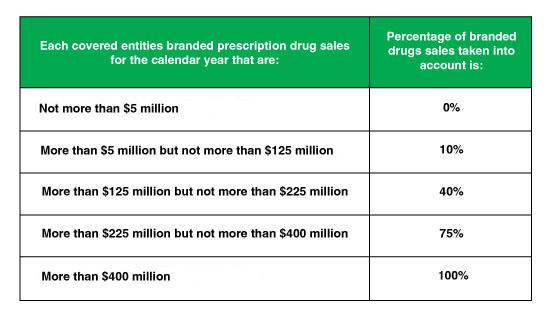
Figure 1 - Annual BPDF Pharma Sales Tiers
Branded Prescription Drug Fee Deadlines & Key Dates for 2025
Click here for an illustrative example of the calculation and additional detail.
Key Dates & Considerations to Keep in Mind
- No later than March 31: IRS Preliminary Fee Notice (letter 4657) mailed
- March 1 – May 15: Opportunity to evaluate and dispute preliminary IRS fee
- No later than August 31: Final Invoice (letter 4658) mailed (including dispute resolution, if applicable)
- No later than September 30: Final fee due
- November 1: Submit form 8947 (Note this is an optional form)
In addition to understanding key dates, it is important for covered entities to be familiar with how the notification, dispute, and payment processes are administered. These operational components play a critical role in ensuring compliance and avoiding discrepancies in the final fee calculation.
Notification & Payment Procedures
Following the issuance of the IRS Preliminary Fee Notice (Letter 4657), covered entities have a defined window to review, validate, and, if necessary, dispute the preliminary fee calculation. This process allows organizations to address discrepancies related to sales data, program inclusion, or controlled group allocations before the final fee is determined.
Once the review period concludes, the IRS issues the Final Fee Notice (Letter 4658), which reflects any updates based on dispute outcomes. Payment of the final fee is required by September 30 and must be submitted via electronic funds transfer. Covered entities operating within a controlled group must also ensure that a designated entity is responsible for communication with the IRS and coordination of payment obligations, as joint and several liability applies across the group.
Branded Prescription Drug Fee Considerations
We recommend the following to ensure your organization is accruing and paying the appropriate amount:
- Consider developing a process and tools to support the branded drug fee analysis.
- Estimate your sales and forecast for each applicable government program and estimate your share of the annual aggregate BPDF.
- Monitor and update your estimate as actual data becomes available and true up as needed.
- Review your IRS Preliminary Fee Notice to confirm that the IRS sales and estimated fee information appear accurate or reasonable based on your estimates.
- Monitor your data related to specified government programs on an ongoing basis to confirm that the data is accurate.
- If you have an orphan drug and would like to remain in the orphan drug exclusion rules, confirm that you meet the exclusion criteria. Note this exclusion is eliminated if the orphan drug is approved for any non-orphan indication.
- Evaluate whether it is beneficial to voluntarily file form 8947. While the form is not required, timely filing may help confirm the company's Medicaid Supplemental Rebates and that orphan drug designations are accurately reflected in the BPDF invoice for the IRS.
Accurate reporting and data validation are also key components of managing BPDF obligations effectively. Given the reliance on detailed sales data across multiple government programs, even small discrepancies can materially impact fee calculations and lead to potential disputes.
Reporting Requirements & Data Considerations
Covered entities are required to maintain and validate detailed data used in the calculation of branded prescription drug sales, including National Drug Code (NDC)-level information and program-specific sales across Medicare, Medicaid, and other federal programs. This data is used by CMS and the IRS to determine each entity’s proportional share of the total fee.
Organizations should establish processes to regularly reconcile internal data against external sources, such as Medicaid state rebate information and IRS-provided estimates, to identify and resolve discrepancies early. Additionally, entities may choose to submit Form 8947 to support data accuracy and provide visibility into specific adjustments, such as orphan drug exclusions or supplemental rebate considerations. Strong data governance and reporting processes are essential to minimizing risk and ensuring accurate fee assessment.
We understand these activities can be challenging due to factors such as limited program knowledge, compressed timelines, limited team bandwidth, and complexity. Here is how we can help:
BPDF Analysis & Finance/Accounting Accrual Support
- Prepare tools and advice to help estimate your BPDF and accrue appropriately.
- Provide advice and/or assistance necessary for proactively monitoring data and avoid future disputes.
- Assist with developing or enhancing your BPDF accrual process and or tools.
- Develop or enhance BPDF process documentation (e.g., Standard Operating Procedures).
- Provide BPDF trainings and or develop training materials.
- Provide guidance to navigate the BPDF process.
- Provide guidance to complete IRS Form 8947 and assist with submission.
Sources
Office of the Federal Register, Federal Register Vol. 79 (July 2014).
Office of the Federal Register, Statuary Updates to Branded Prescription Drug Fee Regulations (Jan. 2026).
Internal Revenue Service (IRS), Annual Fee on Branded Prescription Drug Manufacturers and Importers (Mar. 2026).
About IntegriChain
IntegriChain delivers biopharma’s only comprehensive data-driven commercialization platform from strategy to operational execution, connecting the commercial, financial, and operational dimensions of drug access and profitability. Our ICyte® Platform integrates technology, data, consulting, and managed services to unify critical workflows, replacing manual processes with integrated analytics and precision controls.
Biopharma relies on IntegriChain to optimize patient access and net revenue performance, reduce leakage, and strengthen compliance, ensuring every life-changing therapy reaches patients with speed, affordability, and sustainability. Backed by Nordic Capital, a leading sector-specialized private equity investor with a broad portfolio in healthcare and technology.
IntegriChain is headquartered in Philadelphia, PA, with a location in Pune, India.